



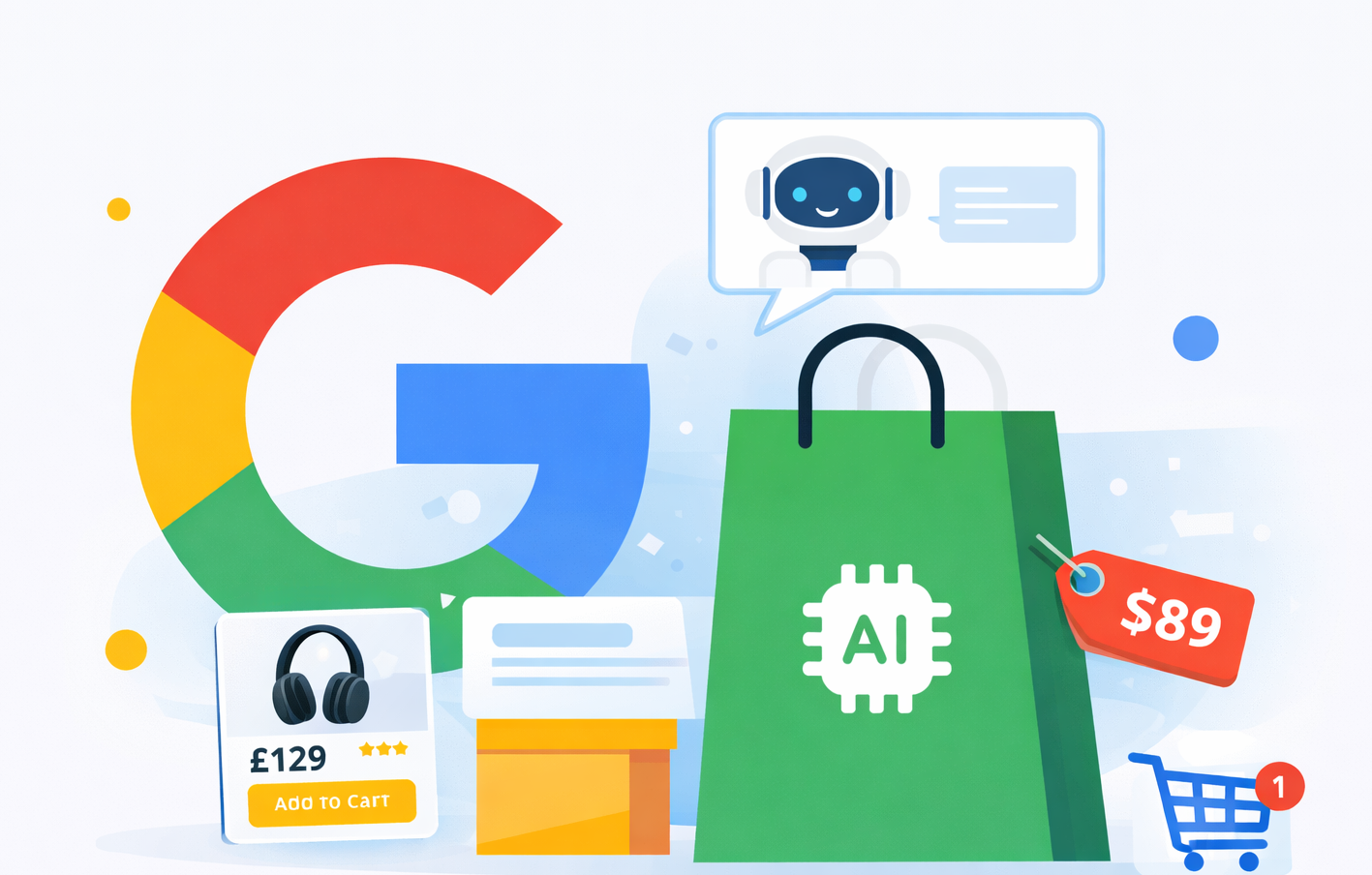
Google is reshaping online shopping by blending artificial intelligence chat experiences with e-commerce. Instead of navigating multiple pages, users can now discover, compare, and purchase products through conversational AI. This shift represents a major evolution in how people interact with search, brands, and digital storefronts.
By integrating AI directly into the shopping journey, Google aims to simplify decision-making and reduce friction. As a result, shopping becomes faster, more personalized, and more intuitive, especially for mobile-first users.
From Traditional Search to Conversational Commerce
Historically, online shopping began with a keyword search followed by clicking links, browsing product pages, and finally checking out. However, AI-driven chat interfaces are changing this process. Now, users can ask natural questions, receive tailored recommendations, and refine their choices through conversation.
Because the interaction feels more human, shoppers are more likely to stay engaged. Moreover, conversational shopping reduces the effort required to find the right product, which can lead to higher conversion rates.
The Role of the Universal Commerce Protocol
To support AI-driven shopping at scale, Google has introduced the Universal Commerce Protocol (UCP). This framework allows AI systems to connect directly with retailers’ product catalogs, pricing systems, and checkout flows.
As a result, AI assistants can handle the entire shopping journey, from discovery to purchase, without sending users to multiple external sites. Additionally, UCP helps standardize how commerce data is shared, making it easier for businesses of all sizes to participate in AI-powered marketplaces.
How Advertising Is Changing in AI-Led Shopping
As shopping moves into AI chat environments, advertising is evolving as well. Instead of traditional search ads or banners, promotions become part of the conversation itself. For example, AI can suggest sponsored products when they are contextually relevant to a user’s query.
Consequently, ads feel less intrusive and more helpful. However, this also challenges marketers to rethink campaign strategies, attribution models, and performance measurement. Traditional metrics like clicks and impressions may no longer fully capture how users make purchasing decisions in conversational environments.
Impact on Retailers and Brands
This shift gives platforms more control over the customer journey. When discovery and checkout happen inside AI interfaces, retailers may have less visibility into customer behavior and limited access to first-party data.
On the positive side, brands can benefit from smoother purchasing experiences and higher intent traffic. Still, businesses must ensure their product data is accurate, well-structured, and optimized for AI discovery. Otherwise, they risk being overlooked in AI-driven recommendations.
Rethinking Measurement and Attribution
One of the biggest challenges in AI-powered shopping is measurement. Purchases may result from a series of conversational interactions rather than a single click. Therefore, marketers need new attribution models that account for engagement, context, and AI-led influence.
Moving forward, conversational analytics and AI-centric performance metrics will become essential. These tools will help businesses understand how AI interactions drive revenue and customer satisfaction.
The Future of AI-Driven E-Commerce
Google’s push to combine AI chat and online shopping signals a broader shift toward conversational commerce. In this model, AI acts as both a guide and a transaction facilitator, helping users make confident buying decisions.
For consumers, this means faster, smarter, and more personalized shopping. For businesses, it requires adaptation, embracing new technologies, optimizing data for AI, and evolving marketing strategies. Ultimately, companies that align early with AI-led commerce will be better positioned to compete in the next phase of digital retail.